
Typical Filipino Rural Life Arts

The artworks are signed by Arman Dapar (a Filipino-American artist known for capturing regional landscapes and community themes) and showcase iconic cultural, agricultural, and geographical elements unique to provincial life in the Philippines.
Typical Filipino Rural Life Arts
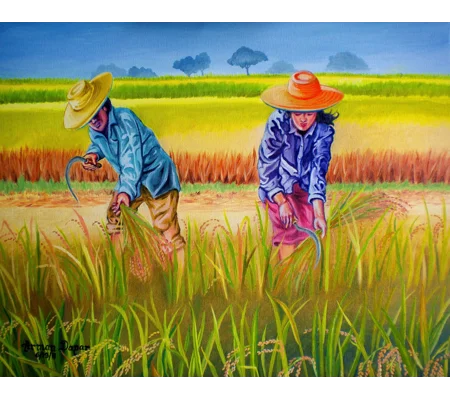
Bunga ng Pawis at Pagod (Fruit of Sweat & Labor) (5 x 7 canvas print)The painting vividly detail the grueling but community-driven stages of rice farming-harvesting mature stalks using a liling or karit (handheld sickles).
Typical Filipino Rural Life Arts
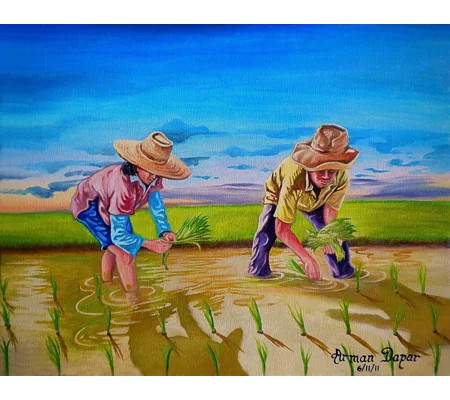
Magtanim ay di Biro (Planting Rice is not a Joke) (5 x 7 canvas print)The painting vividly detail the grueling but community-driven stages of rice farming-manually planting rice seedlings in flooded paddies.
Typical Filipino Rural Life Arts
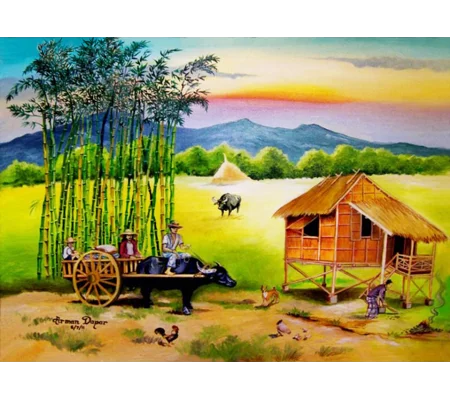
Sa Libis ng Nayon (In the Foothills of the Village) (5 x 7 canvas print)The painting prominently features a traditional Bahay Kubo (nipa hut), a stilt house made of native bamboo and thatched roofing designed to withstand the tropical climate. The painting also shows a carabao (water buffalo) and actively pulling a traditional wooden cart (kariton), carrying a farming family alongside a dense grove of bamboo trees. A haystack (mandala) sits in the background amidst golden fields under a brilliant tropical sunset.
Typical Filipino Rural Life Arts
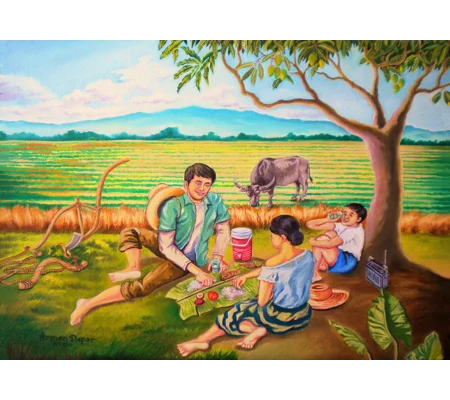
Tanghalian sa Bukid (Lunch in the Field) (5 x 7 canvas print)This painting capture the timeless warmth and serene simplicity of provincial life with this vibrant original painting by Filipino artist Arman Dapar. Beautifully encapsulating the core spirit of traditional Filipino culture, this artwork portrays a local farming family taking a peaceful lunch break (tanghalian) under the refreshing shade of a lush mango tree.
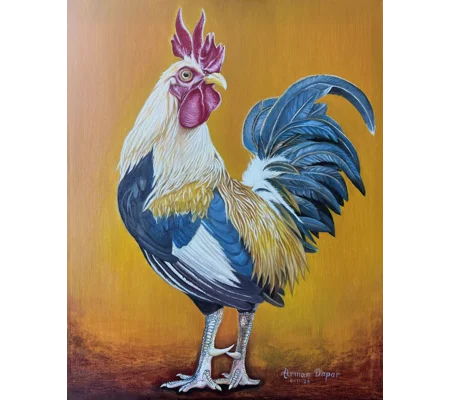
Typical Filipino Rural Life Arts
The Rooster's Stare (7 x 5 canvas print)This painting of vibrant rooster, referencing the ubiquitous presence of livestock and specifically cockfighting (sabong) culture common in local Philippine barrios.Traditionally, the rooster represents the start of the workday, awakening the countryside and symbolizing an authentic connection to nature.